Adam Grant: The Surprising New Research On Procrastination, Perfectionism & Happiness!
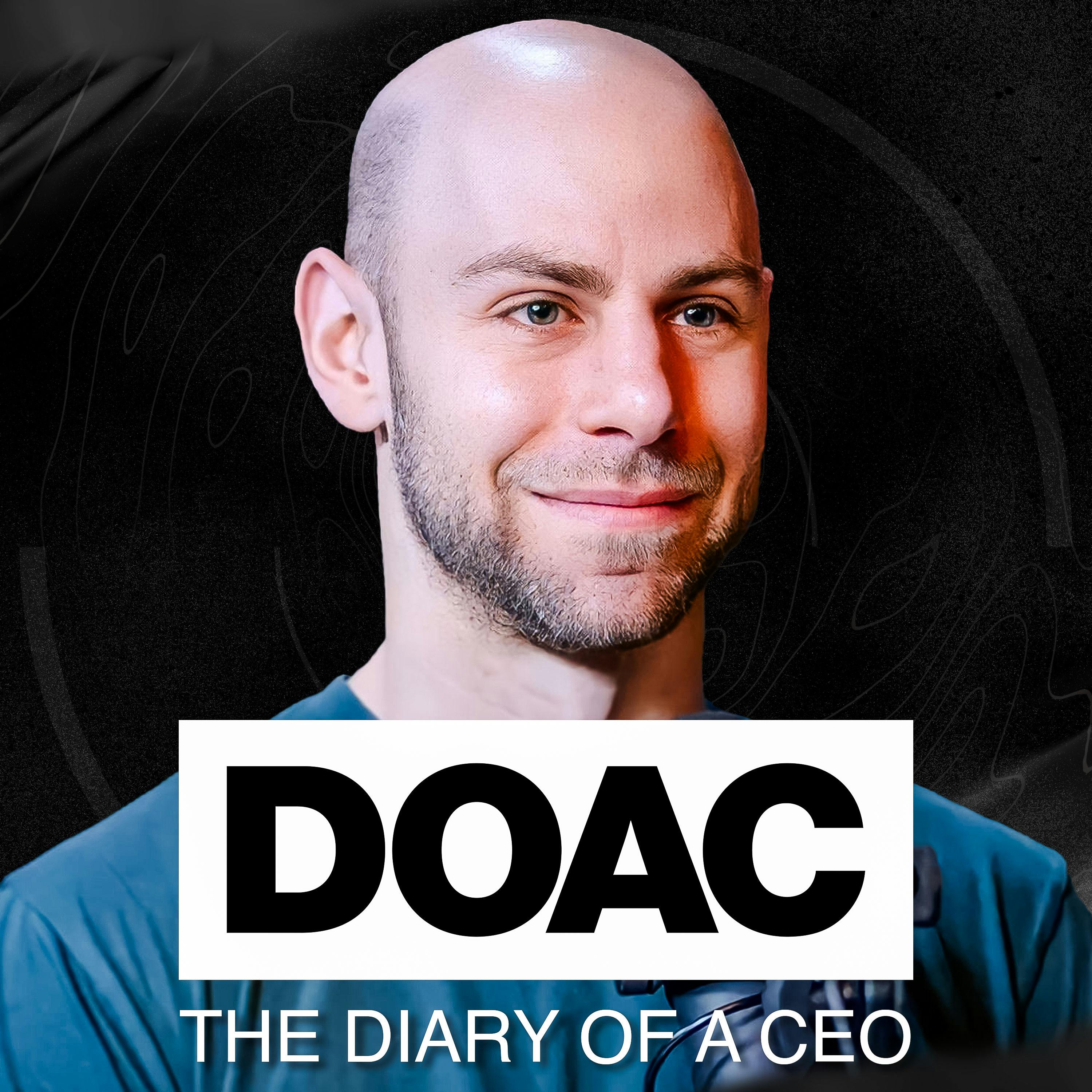
Explore "Self-Control" with insightful episodes like "Adam Grant: The Surprising New Research On Procrastination, Perfectionism & Happiness!", "135. Emotional eating", "Follow the Anomalies", "Why 70% of Relationships End in The First Year w/ Sadia Khan" and "Ep 4 - What is the difference between Fruit of the Spirit and Charisms?" from podcasts like ""The Diary Of A CEO with Steven Bartlett", "The Psychology of your 20s", "Hidden Brain", "The School of Greatness" and "Charisms for Catholics"" and more!


Our relationship with food is so much more psychological then it appears to be, and the evidence for that can be seen with emotional eating. Sometimes we eat as a way to process or regulate our emotions, rather than from actual hunger. This can disrupt our relationship with food and lead us to develop unhealthy coping mechanisms. In today's episode, we discuss:
I also share my own journey with emotional eating and how my relationship with food has evolved in my 20s. Listen now.
Follow me on Instagram: https://www.instagram.com/thatpsychologypodcast/
Follow me on Patreon: https://www.patreon.com/ThePsychologyofyour20s
See omnystudio.com/listener for privacy information.

As we move through our lives, we have to make decisions both big and small. Some are banal: What will I eat for breakfast today? Should I drive or bike to work? Others are more complicated: How much should I contribute to my 401k? What career should I pursue? Today on the show, behavioral economist Richard Thaler explains why our decision making is often far more nuanced than economic models would suggest.
If you missed last week's show on how to keep yourself from getting conned, you can find it here: How to Spot a Scam.

The Summit of Greatness is back! Buy your tickets today – summitofgreatness.com –
After graduating in psychology and completing masters in developmental psychology Sadia began teaching in inner London schools amongst children of deprived backgrounds. She then went on to teach privileged students in Dubai and noticed not only the economic but psychological advantage wealth provides children when their parents can access therapy. Sadia decided to complete her studies in psychotherapy and decided to post a few videos online mainly to make therapy accessible to those who may struggle to afford it and to make therapy more digestible to those who may not understand the concept. The videos blew up and changed her career path to online therapist, podcaster and content creator racking over 100 million views online.
In this episode you will learn,
Buy Sadia's book - https://amzn.to/3OVV2me
For more information go to www.lewishowes.com/1491
For more Greatness text PODCAST to +1 (614) 350-3960
Want more relationship episodes like this one?
Sheleana Aiyana - https://link.chtbl.com/1436-pod
Lewis Howes solo episode on relationships -
https://link.chtbl.com/1450-pod

On this episode of Charisms for Catholics, we explore the connection between the fruit of the Holy Spirit and charisms.
We discuss the importance of both general gifts and individual charisms with an emphasis on the fruits of the Holy Spirit being the end product of our relationship with the Holy Spirit.
Jill shares her insights on how to identify our charisms to help us discover where the Holy Spirit is active in our life through the manifestation of fruit. We also hear stories about how integrating our charisms can help advance our spiritual journey, cultivate a deeper relationship with God, and even lead to a new spiritual awakening.
To learn more about your own charisms, take the Charism Assessment on our website at https://manypartsministries.com
Join us as we explore the diversity of gifts and charisms and their important roles in building the church and advancing our spiritual journey.

Check out my book "Don't Be DESPERATE: Get Over Your Breakup with CLARITY & DIGNITY" on Amazon: https://amzn.to/3KbFh9k
Support the podcast HERE: https://www.buymeacoffee.com/breakupboost
Get More Help... get over your ex or for general dating & relationship guidance:
(1) ORDER EMAIL or PHONE coaching at breakupBOOST.com
(2) Call Trina direct on The Breakup Hotline ANYTIME! (see website for details: https://www.breakupboost.com/live-coaching-trina-breakup-boost)
(3) GET A PERSONALIZED VIDEO from Trina for you or a friend on CAMEO: cameo.com/breakupboost
(4) CHAT ONLINE with Trina from your phone or computer: premium.chat/breakupBOOST
(5) SUBSCRIBE to Trina's YouTube - search "breakup BOOST"
(6) FOLLOW on Instagram @breakupBOOST or TikTok @breakup BOOST


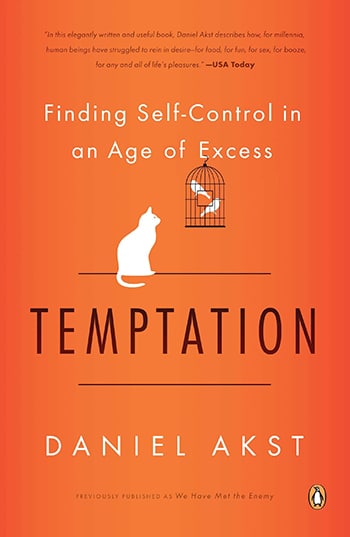
As long as humans have existed, we’ve had to choose between our lower and higher desires — between what we want in the moment, and what we want in the long-term. As long as humans have existed, we’ve had to exercise self-control.
While exercising self-control has always been part of the human condition, our ideas about it have changed through the ages, as have the number of obstacles to doing so.
My guest charted the course of these changes in his book Temptation: Finding Self-Control in an Age of Excess, and he takes us on a tour of them today. His name is Daniel Akst, and we begin our conversation with a definition of what self-control is. We then discuss how Freudian psychology and the scientific study of self-control took it from being something the ancient Greeks and Romans considered an essential virtue of character, to something you shouldn’t or even couldn’t exercise. We also talk about what it is about the modern age that makes self-control uniquely difficult to put into practice. We end our conversation with how, despite the addition of complexities and hindrances, self-control remains a fundamental resource in a flourishing life, and Daniel shares practical tips for preserving yours by changing your environment, so you actually don’t have to exercise self-control as much.


The fruit of the Spirit has nine forms: love, joy, peace, patience, kindness, goodness, faithfulness, gentleness and self-control. These are wonderful aspects of our character the Lord wants to develop within in us. But the fruit of the Spirit, just like natural fruit, needs to be cultivated with skill and active work. These guidelines will help you in the process!
Support the show
Every day we go to bed knowing we have left many things unfinished, allowed intrusive thoughts about unfinished business interrupt the work flow, and wasted a lot of time. Even though, the productivity guru Stephen Covey has famously said, “The main thing is to keep the main thing the main thing” many of us can’t decide fast enough or well enough what that main thing is. The researchers agree that having to make decisions, small or big, every step of the way depletes the mental resource available to each person on a daily basis and the best antidote to that is to not start the day without a plan; and yet, many find themselves wasting this limited but most prized resource without much thought.
On this episode, the world-renowned research psychologist and accomplished author of over 35 books, Dr. Roy F. Baumeister, talks about goal-pursuit, self-efficacy, roadblocks to planning, and ways to rethink a daily plan.
About Roy Baumeister, Ph.D.
Roy F. Baumeister is currently professor of psychology at the University of Queensland. He among the most prolific and most frequently cited psychologists in the world, with over 600 publications. His 35 books include the New York Times bestseller Willpower. His research covers self and identity, self-regulation, interpersonal rejection and the need to belong, sexuality and gender, aggression, self-esteem, meaning, consciousness, free will, and self-presentation. In 2013 he received the William James award for lifetime achievement in psychological science (the Association for Psychological Science’s highest honor).
Resources

A secret ingredient in the life of an easy-going, popular kid with lots of friends and good grades is self-control. Eventually, this kid grows up into a focused, accomplished, and well-adjusted adult who lives a physically well-disciplined and financially secure life without ever brushing against the law or criminal justice. On the other hand, those who fail to deploy self-restraint bear the brunt of an onslaught of bad decisions and a life of discontent.
On this episode, the world-renowned psychologist and author of the New York Times bestseller Willpower: Rediscovering the Greatest Human Strength, Dr. Roy F. Baumeister talks about the mechanism behind self-control - the brain’s internal reins that help pull back and inner brakes to cease oneself from moving forward.
About Roy Baumeister, Ph.D.
Roy F. Baumeister is currently professor of psychology at the University of Queensland. He among the most prolific and most frequently cited psychologists in the world, with over 600 publications. His 35 books include the New York Times bestseller Willpower. His research covers self and identity, self-regulation, interpersonal rejection and the need to belong, sexuality and gender, aggression, self-esteem, meaning, consciousness, free will, and self-presentation. In 2013 he received the William James award for lifetime achievement in psychological science (the Association for Psychological Science’s highest honor).
Resources


Stay up to date
For any inquiries, please email us at [email protected]